

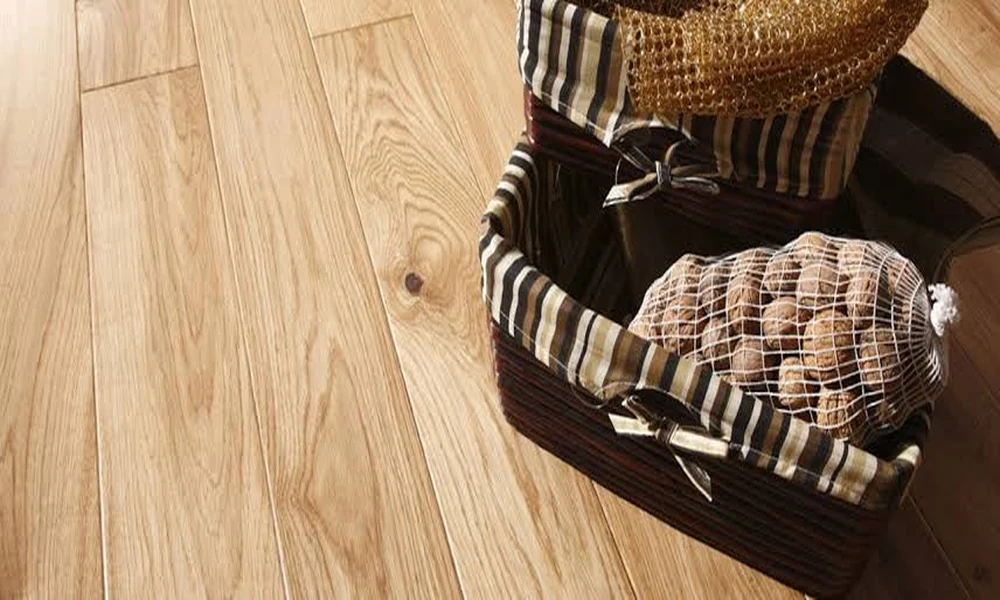
The finish applied to an oak floor is one of the most consequential decisions in a flooring project, and it is one that many buyers make without fully understanding the practical differences between the options. Oiled and lacquered oak floors can look remarkably similar when new, but they age differently, require different maintenance regimes, and suit different households and lifestyles.
Choosing the wrong finish for the way a floor will be used leads to either unnecessary maintenance work or a floor that deteriorates faster than it should. This guide explains the key differences between the two finishes clearly so the decision can be made on the right basis.
How Each Finish Works
Understanding what each finish does to the timber explains most of the practical differences between them. An oil finish penetrates into the wood fibres, nourishing the timber and providing protection from within the surface rather than sitting on top of it. The result is a floor that looks and feels like natural wood, with the grain and texture tactile underfoot, and a matte or satin sheen that reads as organic rather than applied.
A lacquered finish forms a hard polymer film on the surface of the timber, sealing it completely and creating a protective layer that sits above the wood rather than within it. Lacquered floors typically have a more uniform sheen and a slightly more polished appearance than oiled equivalents.
Durability and Day to Day Performance
Lacquered oak floors are generally more resistant to everyday surface abrasion than oiled floors. The hard surface film resists scratching from grit, furniture movement, and foot traffic more effectively than an oil finish, and it is easier to clean: spills sit on the surface and can be wiped away without penetrating the timber. In a busy household with children, pets, and high foot traffic, a lacquered floor tends to look presentable with less daily effort.
Oiled floors are softer underfoot and more susceptible to surface marking from grit and concentrated foot traffic in high-use areas. They show wear more readily, particularly in hallways and doorways, and require more attentive cleaning to prevent grit from abrading the surface over time. The trade off is that an oiled surface is far easier to repair locally: a worn or marked area can be spot-treated with a compatible oil product to restore the finish without any visible repair joint. On a lacquered floor, local damage is visible and the only proper repair is a full sand and recoat of the affected area.
Maintenance Requirements
This is where the two finishes diverge most significantly in practical terms. A lacquered floor requires very little maintenance beyond regular sweeping and occasional damp mopping with a suitable wood floor cleaner. The sealed surface does not need periodic treatment to maintain its protective properties, and the floor can go many years without any active maintenance beyond cleaning. When the lacquer does eventually wear, the floor needs a full professional sand and recoat, which is a significant undertaking.
An oiled floor requires more active maintenance. The oil finish depletes over time through cleaning and foot traffic, and a periodic re-oiling, typically once or twice a year in high traffic areas, is needed to maintain the protective properties of the finish and keep the timber nourished. This maintenance is straightforward for a competent homeowner and does not require professional involvement, but it is a commitment that a lacquered floor does not impose. The benefit is that the ongoing maintenance keeps the floor in good condition continuously, with no single large refinishing event needed for many years. A full range of solid oak flooring in both oiled and lacquered finishes is available from UK specialists, with sample ordering to compare the two finishes in situ before committing.
Which Finish Suits Which Home
The right choice depends on the household, the room, and the owner’s approach to maintenance. Lacquered floors suit busy households where ease of cleaning and low maintenance commitment are priorities, rooms with high foot traffic where abrasion resistance matters, and homeowners who prefer to set and forget rather than maintain periodically. Oiled floors suit homeowners who want the most natural-looking result and are willing to maintain the floor periodically, rooms where spot repairability is a priority, and properties where the organic character of the timber is the primary aesthetic goal.
Frequently Asked Questions
Can an oiled oak floor be converted to lacquered later?
Yes, but the floor must be fully sanded back to bare timber first to remove all residual oil before lacquer is applied, as lacquer will not adhere correctly over an oil-contaminated surface.
Which finish is better for homes with dogs?
Lacquered floors generally perform better in homes with dogs due to their greater resistance to scratching from claws and easier cleaning of muddy paw prints, though a hard-wax oil finish offers a middle ground with better repairability than pure lacquer.
How often does an oiled oak floor need re-oiling?
High-traffic areas such as hallways typically benefit from re-oiling once or twice a year, while lower traffic rooms may only need attention every two to three years; the floor’s appearance and how water beads on the surface are reliable indicators of when re-oiling is needed.
Does a lacquered floor look different from an oiled floor?
Yes; lacquered floors typically have a more uniform sheen and a slightly more polished appearance, while oiled floors look more natural and matte, with the timber grain and texture more apparent both visually and underfoot.
Final Thoughts
The choice between oiled and lacquered oak flooring is ultimately a lifestyle decision as much as an aesthetic one. Lacquer suits those who want a robust, low maintenance floor that performs well under heavy use. Oil suits those who want a natural result and are comfortable with periodic maintenance in exchange for easier spot repair and a more organic appearance.
Neither is objectively better: the right finish is the one that matches the way the floor will actually be used. Specialist suppliers of solid and engineered oak flooring typically offer both finishes across their ranges and provide sample boards to help make the comparison in the actual home environment before purchasing.
