

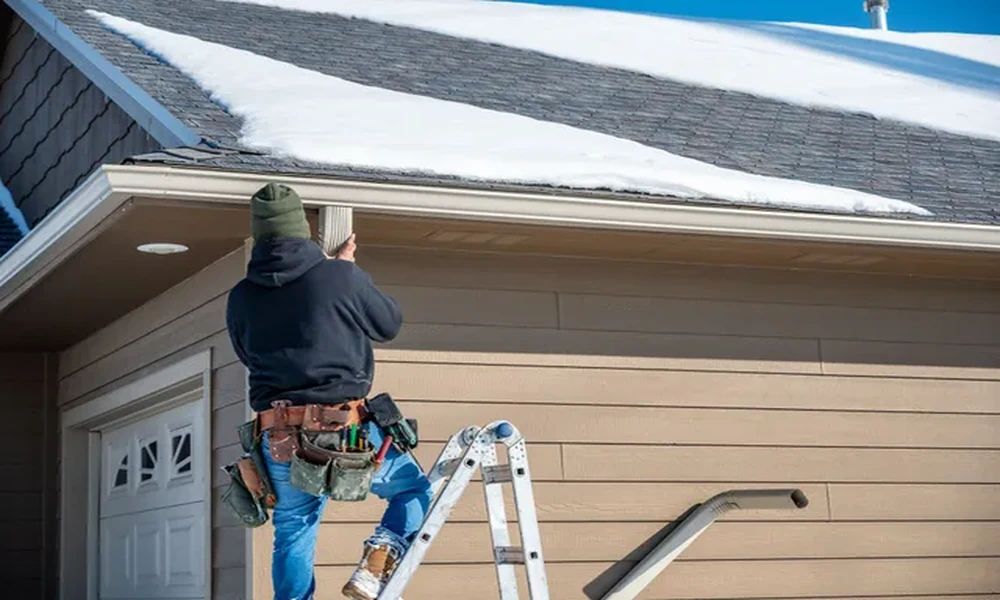
Siding looks like one of the simplest parts of a house. Panels lock together, nails go into the wall, and the job is done. But exterior cladding is always moving. It swells in summer sun, shrinks on frozen January nights and takes a steady beating from wind, ice and snow piled against the lower courses. In a place with real winters, those movements decide whether a siding job stays tight and straight for decades or starts to buckle, crack and rattle within a few seasons.
Temperature affects siding twice. First, the weather on installation day shapes how each panel is cut, gapped and fastened. Second, the yearly swing between extreme heat and deep cold tests every one of those choices for the life of the wall. A job that looks perfect in October can show its flaws by February.
Homeowners planning an exterior project often ask whether winter installation is a mistake. A capable Beloit siding contractor can install through much of the cold season, but the methods have to change with the thermometer. Knowing what those changes are helps you judge the work long after the crew has packed up.
Why Panels Never Sit Still
Vinyl is the most common siding material in cold regions, and it is also the one that moves the most. Like other plastics, it grows as it warms and shrinks as it cools. A standard 12 foot panel can change length by more than half an inch between a hot summer afternoon and a subzero morning.
That movement is not a defect. Vinyl siding is designed to float on the wall. The nails go in the center of long slots, and they are not driven tight, so the panel can slide back and forth. At corners, windows and doors, each panel end tucks into a channel with room to spare. When this is done right, the expansion stays hidden inside those pockets.
The problems come when a panel is pinned in place. A nail driven flush against the vinyl, or a nail through the face of the panel, locks it down. In summer, the trapped panel bows outward in long waves. In winter, it pulls hard against its fasteners and can split at the nail slots.
What Changes Below Freezing
Cold weather does not stop a siding job, but it changes the details. The industry installation manual says the normal expansion gap for vinyl siding should be widened when installing below 40 degrees Fahrenheit, because panels put up cold are already near their shortest length. If the crew leaves only the summer gap, the panels have nowhere to go when warm weather arrives.
Vinyl also gets stiffer and more brittle as it cools. A panel that flexes easily in June can crack if it is bent sharply or dropped in January. Experienced installers handle cold panels gently, keep the boxes in a heated space when they can, and cut slowly with a fine-tooth blade so the edges don’t shatter.
On a cold install day, a homeowner can watch for a few signs of careful work:
- Nails sit in the middle of the slots with a little play left under the heads
- Panel ends stop short of the channels instead of jamming tight against them
- Cut edges look clean, with no chips or hairline cracks
- Boxes of siding are stored somewhere warm rather than left out in the snow
None of this takes much extra time. It reflects a crew that adjusts its work to the conditions.
How Other Materials Handle Winter
Fiber Cement
Fiber cement moves far less with temperature than vinyl, but it reacts to moisture. Boards with cut ends left unpainted can soak up water. Repeated freezing and thawing can then flake or swell the edges. Good installers prime or seal every cut and leave the clearance the manufacturer calls for above roofs, decks and the ground. Caulk and paint also have minimum application temperatures, so finish work sometimes waits for a milder day.
Engineered Wood
Engineered wood siding is lighter than fiber cement and resists impacts well, which matters when hail or a stray snowball hits the wall. Its weak point is also moisture at cut edges and nail holes. Fasteners that are overdriven break through the protective surface. In a climate with long wet winters, that small detail can decide whether the boards last 30 years or start swelling in 10.
Insulated Vinyl
Insulated vinyl adds a rigid foam backing to each panel. That makes the wall a bit warmer, stiffens the panel against wind and helps it shrug off impacts. Because the foam changes how the panels overlap, the cold weather joint details follow each manufacturer’s instructions rather than a single rule.
The Wall Behind the Panels
Whatever goes on the outside, winter performance depends on the layer underneath. Siding sheds most of the water that hits it, but wind driven rain and melting snow always find a way behind. The weather resistive barrier and the flashing around windows, doors and roof lines carry that water back out.
Cold climates add one more issue. Warm, damp air from inside the house moves outward through the wall in winter. If it hits a cold surface and has no way to dry, moisture builds up inside the wall cavity. That is why a replacement job is a good time to check the condition of the sheathing, add missing flashing and fix gaps around penetrations before the new panels cover them again.
Kickout flashing deserves special attention. Where a roof edge ends against a sidewall, this small angled piece of metal steers runoff away from the siding. Without it, snowmelt from every thaw can run straight into the wall, and the rot often stays hidden until a soft spot appears on the trim or on an interior wall.
Choosing When to Schedule
Spring and fall are still the easiest seasons for siding work. Materials handle well, sealants cure properly and the days are long enough for careful finishing. Winter installation makes sense when damage needs prompt repair, or when a crew’s schedule frees up and the forecast offers a stretch of dry weather.
The season matters less than whether the crew adapts to it. Wider gaps, gentle handling, careful fastening and attention to the barrier behind the panels hold up in any month. A wall built with those details will stay quiet and straight through hot summers and bitter winters alike.
