

Key Takeaways
- Desert pests commonly move toward homes for water, food, shade, and shelter.
- Small repairs around doors, screens, pipes, and garages can block many entry routes.
- Rainy periods and monsoon storms can quickly change pest activity around a property.
- Consistent cleaning, careful irrigation, yard maintenance, and monitoring work better together than any one step alone.
- Repeated sightings, droppings, damage, or stinging pests near living areas deserve prompt attention.
Desert living brings long stretches of heat, dry soil, and sudden seasonal storms. Those conditions can make a home especially appealing to insects and rodents looking for relief. A prevention-first approach to pest control helps homeowners reduce the food, water, and hiding places that attract pests. The goal is not to make a property completely free of outdoor wildlife. Instead, it is to make the house less conducive to pests entering, feeding, nesting, or reproducing. A few routine habits can prevent a small sighting from becoming a recurring household problem.
Why Desert Homes Face Special Pest Challenges
High temperatures can drive pests toward cooler indoor rooms, shaded patios, garages, and irrigated landscaping. Even a minor drip from a hose bib, air-conditioning line, or kitchen pipe can become a reliable water source when the surrounding environment is dry. Desert yards can also provide protected travel routes. Block walls, gravel borders, dense shrubs, stacked pots, firewood, and storage clutter create sheltered spaces where pests can hide during the day. Activity may continue year-round, although the pests homeowners see and the places they gather can change with the season.
Common Pests That Look for Shelter
One insect or animal outdoors does not automatically mean there is an infestation. However, knowing what commonly seeks shelter around desert homes can make inspections more useful.
- Ants may follow food trails indoors or search for moisture near sinks, pipes, and irrigated plants.
- Cockroaches can use drains, garage gaps, utility openings, and poorly sealed doors.
- Scorpions and spiders often appear where prey insects gather, especially around exterior lights, wall edges, and clutter.
- Rodents look for shade, water, accessible food, and protected nesting material.
- Termites may be more noticeable where wood, soil, and moisture remain in close contact.
- Mosquitoes can reproduce in surprisingly small amounts of standing water.
Seal the Places Pests Use to Get Inside
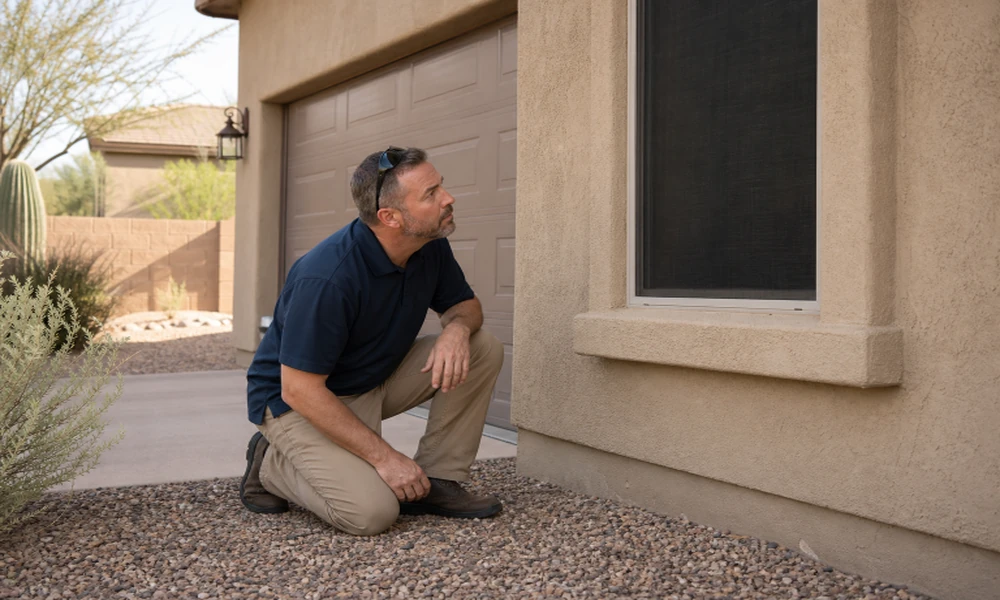
Small gaps matter because many pests need only a small opening to enter. Walk the exterior of the home every month and after major weather events, paying close attention to low, shaded, or rarely used areas.
- Inspect exterior door seals and replace worn door sweeps.
- Repair damaged window screens, patio screens, attic screens, and vent covers.
- Seal cracks around utility lines, pipes, wall joints, and exterior vents.
- Check the bottom and sides of garage doors for daylight or visible gaps.
- Keep cardboard, firewood, and stored items away from exterior walls.
Control Water Without Wasting It
Water management is one of the most valuable prevention steps in a dry climate. Fix dripping faucets, irrigation leaks, and condensation problems near air-conditioning equipment. Avoid overspray that leaves damp soil against the foundation or creates wet areas beneath shaded plants. Empty plant saucers and outdoor containers after watering, keep pool circulation and cleaning routines on schedule, and clear gutters before the rainy season. Smart irrigation timers can help prevent unnecessary runoff while still giving plants the water they need.
Prepare for Monsoon-Driven Pest Activity
Heavy rain, wind, and humidity can displace pests from outdoor shelter while also creating puddles and debris-filled drains. Before a storm, clear leaves from gutters, remove buckets and toys that collect water, confirm weather stripping is secure, and close the garage when it is not in use. After the storm, inspect patios, sheds, storage rooms, roof edges, and screens. Look for standing water, fresh cracks, torn materials, or signs that insects and rodents have moved into protected spaces.
Make Food and Waste Less Attractive
Kitchen and trash habits can make a major difference. Store dry goods in sealed containers, wipe crumbs and spills quickly, and rinse recyclable containers before putting them in bins. Use tight-fitting lids on indoor and outdoor garbage cans. Wash pet bowls daily and avoid leaving pet food outside overnight. Move birdseed, compost, and animal feed away from doors and walls. These steps remove the easy meals that can turn occasional visitors into repeat pests.
Keep the Yard From Becoming a Pest Highway
Trim branches and shrubs so they do not touch the roof or exterior walls. Remove fallen fruit, leaf buildup, and excess plant material, and keep mulch or ground cover several inches away from the foundation. Store lumber, ladders, pots, and similar items off the ground when possible. Outdoor lighting deserves attention, too. Bright lights can attract flying insects, which may then attract spiders and other predators. Check walls, fences, and gates for openings near ground level that could provide cover or access.
Use an Integrated Prevention Plan
A practical integrated plan begins with inspection and prevention, then uses the least disruptive effective response. The University of Arizona’s home pest resources can help homeowners identify common household pests and understand local prevention options.
- Inspect: Watch for droppings, shed skins, nests, gnaw marks, trails, damage, and unusual odors.
- Identify: Confirm what you are seeing before choosing a treatment method.
- Prevent: Remove access to food, water, clutter, and entry points.
- Monitor: Use visual checks and appropriate traps to track activity.
- Respond: Select a targeted solution, then review whether it worked.
This approach reflects the basic principle that integrated pest management relies on prevention and informed decisions rather than automatic, broad treatment.
Know When a Sighting Needs More Attention
Repeated sightings in multiple rooms, fresh droppings, gnaw marks, damaged food packaging, nesting material, or persistent insect trails can indicate a hidden entry route or nesting area. Winged insects near doors and windows should be identified promptly. Do not disturb stinging insect nests close to doorways, play areas, or pet spaces.
Use Household Products With Care
Read the full label before using any pest-control product, follow the listed application method, and use only the amount directed. Keep products away from children, pets, food, and water sources. Do not mix products unless the label specifically permits it, and never use an outdoor product indoors.
A Simple Monthly Pest Prevention Checklist
- Check the exterior for cracks, gaps, damaged screens, and worn seals.
- Look for leaks, standing water, damp soil, and irrigation overspray.
- Trim vegetation and remove clutter near walls and foundations.
- Inspect pantries, garages, sheds, and storage areas for activity.
- Clean trash containers, secure pet food, and record recurring sightings by location.
Conclusion
Desert pest prevention works best as a steady routine. Small repairs, clean storage, thoughtful watering, and seasonal inspections remove many of the conditions pests need to settle in. When warning signs persist, spread, or pose a safety concern, addressing them early can help prevent a minor issue from becoming a larger problem. Homeowners can regularly check doors, windows, screens, garages, plumbing areas, and foundation edges for gaps, moisture, droppings, or signs of nesting. Keeping food sealed, trash covered, clutter limited, and vegetation trimmed away from the home can also reduce common attractants. After heavy rain, extreme heat, or changes to irrigation and landscaping, an additional inspection can help identify new pest-friendly conditions. A consistent prevention routine makes it easier to notice changes, complete minor repairs, and seek appropriate assistance when activity does not improve.
