

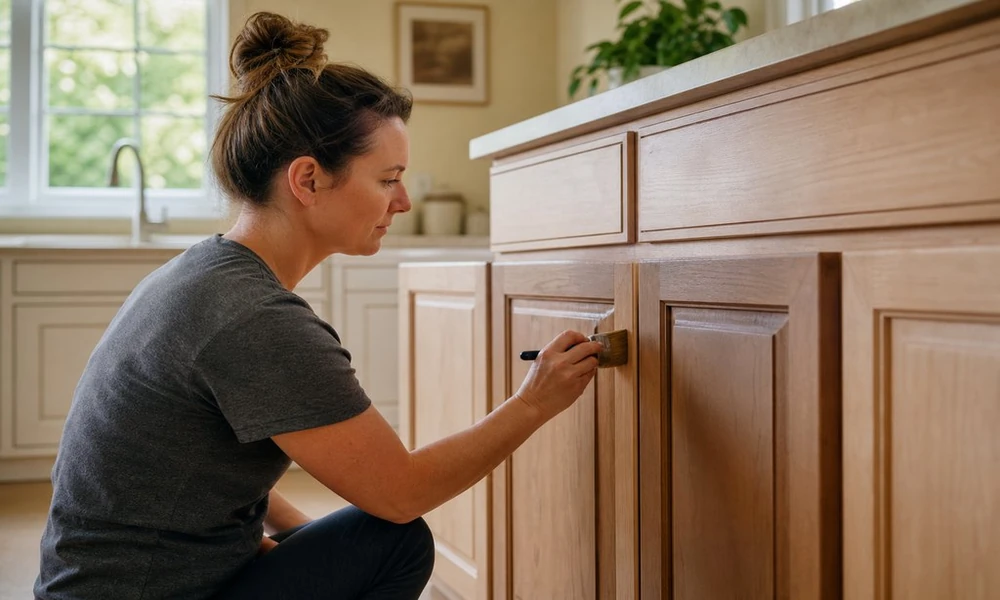
Kitchen cabinets
A kitchen might seem outdated even if your cabinets are in good working order. Cabinets that were once beautiful may have faded finishes, yellowing clear coat, visible wear around the pulls, or colors that don’t fit the rest of the room’s décor. Cabinet refinishing is one option that allows homeowners to update the look of their cabinets without replacing the cabinet boxes, doors and drawers. However, cabinet refinishing isn’t the same as painting your cabinets. It requires proper prep, proper products and proper drying times.
When Is Cabinet Refinishing the Right Fit?
Cabinet refinishing is recommended when cabinet doors still close, drawers still operate, and cabinet boxes aren’t swollen or coming apart. Solid wood cabinet doors, high-quality veneer cabinet doors, and previously painted cabinets can all be good candidates for refinishing, though the techniques vary depending on the existing cabinet type. Inspect your cabinet’s condition before determining what finish you should apply. Refinishing might be an option when:
- You notice scratches, faded stains or dull finishes
- Your cabinets have minor dents and dings that can be filled
- Your cabinet color is outdated but your cabinets are still sound
- You have grease marks and yellowing around your handles and knobs
- Your cabinet doors and drawers need adjustment but are fine otherwise
Cabinet refinishing can give new life to cabinets that have good bones. The finish doesn’t change the cabinets’ functionality or storage capacity; the practical side of cabinet refinishing Davie starts there. Kitchen Remodeler Davie is a kitchen remodeling company based in Davie, Florida.
If your cabinets only need a few touch-ups, refinishing is probably overkill. They might just need some spot painting.
If your cabinets have damaged cabinet boxes, severe delamination, recurring mold issues – if you want the source, it’s https://epa.gov/mold, or significant structural problems, refinishing may not solve them. Swollen particleboard cabinets that get wet under your sink or dishwasher likely won’t survive a coat of paint or stain. Warped cabinet doors might need to be replaced instead of refinished.
If your kitchen needs updated functionality or storage, or if you’ve got broken cabinet hardware, you might be better off doing a full kitchen remodel. New finishes can’t add deeper cabinet storage or reposition a poorly located microwave oven.
The Refinishing Process
Cabinet refinishing involves a lot of work before any color is applied. Cabinets get coated in cooking oil, furniture polish and other substances that make it hard for finishes to adhere. Thorough cleaning and degreasing are important, even if your cabinets look clean. Some cabinet refinishing steps include the following:
- Remove cabinet doors, drawers, pulls and hinges if possible.
- Clean all cabinet surfaces to remove grease and residue.
- Fill damaged areas, cracks, loose joints and old screw holes.
- Sand or degloss existing finishes to help new finishes bond.
- Apply the necessary primer, stain or bond coat.
- Apply the number of finish coats required for the product, allowing sufficient drying time between coats.
- Reattach and adjust doors, drawers and cabinet hardware.
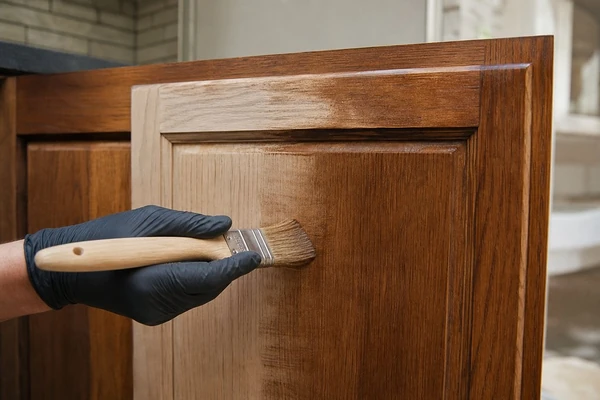
Cabinet refinishing
Refinishing exposes the true condition of your cabinets. If you have dark spots or silicone sealant on the wood underneath the existing finish, a new finish won’t hide it unless you properly seal it first.
Cabinet paints, stains and topcoats might feel dry within a few hours, but they’re not fully cured. Reattaching cabinet doors and hardware too soon can lead to sticking doors, dented finishes and transfer marks where the door meets the cabinet face.
Always review the manufacturer’s recommendations for the specific finish you choose. Most finishes will need at least one night to dry before handling, and they might need several days before you start using them normally. Don’t scrub the finished cabinet surfaces, slam the doors or hang damp towels on the handles until the finish has cured.
Matching the Finish to the Cabinets
Paint is the most dramatic way to update your cabinet’s appearance, covering up inconsistencies in the wood grain, old stain colors and some repairs. Paint is an excellent choice for cabinets with outdated colors or mismatched doors.
Stain is the best option when you have wood grain you want to highlight and an old stain finish that can be evenly removed or sanded away. Staining doesn’t hide patched areas, filler spots or uneven veneer as well.
Topcoats are the best choice when you like the color of your cabinets but want to restore a scratched or worn finish. Topcoats bring back the luster of your cabinets and can make your entire kitchen look new.
Preparation Before the First Coat
Decide whether you’ll want to use your existing cabinet hardware, patch and drill new holes or reposition the knobs and pulls before you start refinishing. This decision will impact what repairs you’ll make, how many holes you’ll drill and how many holes will be left visible when you’re done.
Before you start refinishing your cabinets, empty them completely, label the cabinet doors and hinges so you can replace them easily, and set aside a clean place where you can lay the cabinet doors to dry between coats.
