

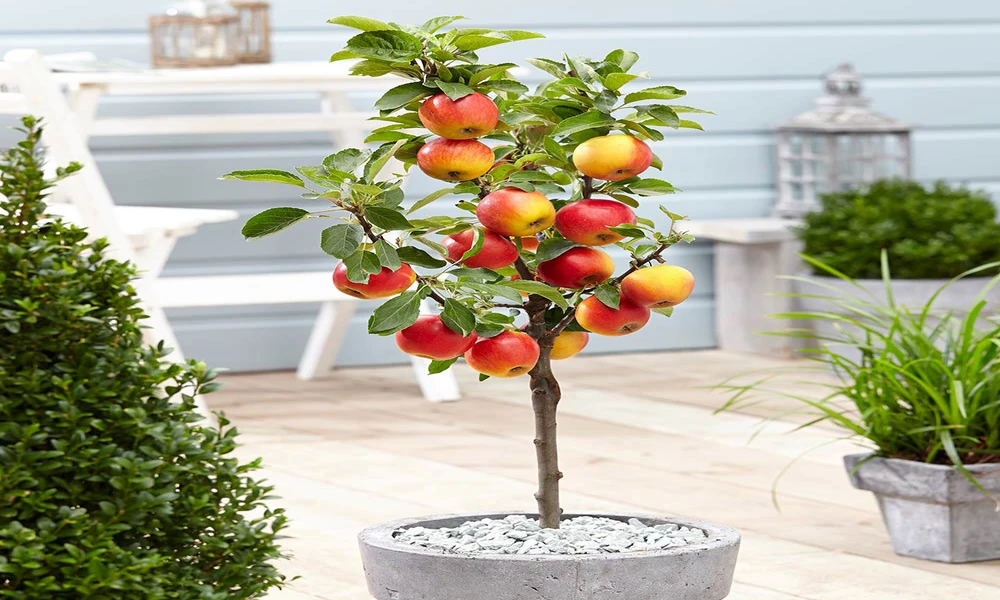
A fruit tree in a front garden is judged from several directions at once. It greets the household, contributes to the street, affects paths and windows, and produces a crop in a place that is often more public than the back garden. That visibility makes good planning especially rewarding and small errors unusually obvious.
Kerb appeal is not about keeping edible planting ornamental and unproductive. It is about giving the tree a clear outline, an appropriate scale, tidy access, and a harvest plan. When those elements agree, blossom and fruit add character. When they conflict, the entrance starts to feel crowded, messy, or difficult to use.
A street-facing tree has to work during bare winter months and busy harvest weeks as well as during blossom. A nursery specialist at Fruit-Trees flags mature scale and pedestrian access as the first front-garden checks. The tree should frame the entrance without narrowing a path, hiding a useful sightline, or dropping ripe fruit where it is repeatedly walked over. Gardeners also need a reachable pruning position and a clear root area despite nearby paving. Treating appearance, harvest, and maintenance as one design brief keeps edible kerb appeal convincing after the blossom has finished.
The street-facing position therefore needs more than a pretty spring picture. The tree’s least glamorous moments matter too: bare branches in January, thinning in early summer, windfalls in late season, and a watering can crossing the entrance during a dry spell.
The errors below are common because each begins with a reasonable aim. More blossom, quick screening, a generous crop, or a decorative pot all sound helpful. The problem appears when that one aim is allowed to overrule movement, scale, roots, and routine.
Error One: Choosing the View Before the Route
Around error one: choosing the view before the route, local conditions prevent the answer from becoming a formula. With reflected heat, roadside wind, dry paving edges, late frost, and rainfall channelled by hard surfaces, the significance of a branch that seems harmless in summer becomes more troublesome when wet, fruit-laden, or blown across a path changes from garden to garden. Resilience comes from acknowledging that interaction, not from pretending it can be designed away.
Reality enters the comparison through opening the gate fully while another person passes beneath the marked canopy. The example connects the proposed tree to a household habit instead of treating it as a self-contained garden feature. It also exposes which compromises would be repeated year after year.
In error one: choosing the view before the route, before comparing varieties, pause over one physical truth: the entrance path, gate swing, bins, deliveries, and regular foot traffic set a non-negotiable circulation pattern. It changes how error one: choosing the view before the route works in an ordinary garden and what the gardener must be able to maintain. A sound shortlist begins with that constraint and lets cultivar preference follow.
One assumption deserves particular suspicion: placing the tree in the best photograph position while leaving too little room for people and practical tasks. It shifts responsibility from the present decision to a future gardener who must repeatedly prune, protect or reorganise the space. A better answer removes that burden at source.
The most useful next step is walking the route carrying shopping, tools, and a watering can while the future canopy is marked. Record what the exercise reveals and compare every candidate against the same standard. That keeps the decision transparent and repeatable.
A balanced answer creates a tree that frames movement instead of interrupting it. That outcome gives error one: choosing the view before the route continuity from one season to the next and keeps the work of daily arrivals, spring blossom, summer shade, fruit drop, pruning, and winter street views in scale with a welcoming entrance that earns its keep through blossom, structure, and useful fruit. Nothing essential depends on unusually generous conditions.
Error Two: Ignoring Sightlines and Neighbours
In error two: ignoring sightlines and neighbours, one fact gives this part of the decision its scale: front gardens contribute to visibility from drives, pavements, windows, and adjoining properties. It affects the tree, the surrounding garden, and the time needed for annual care. Once it is clear, error two: ignoring sightlines and neighbours becomes a question of fit rather than optimism.
Around error two: ignoring sightlines and neighbours, conditions on the ground complete the comparison. Reflected heat, roadside wind, dry paving edges, late frost, and rainfall channelled by hard surfaces shape the annual rhythm, while seasonal leaf cover changes through the year, so winter transparency and summer density both deserve attention can magnify or soften their effect. That context helps error two: ignoring sightlines and neighbours remain realistic for a British audience.
Within error two: ignoring sightlines and neighbours, a fragile version of the plan relies on using foliage for screening without checking road safety, borrowed views, or the shade cast next door. It tends to work only while weather, time and enthusiasm are unusually generous. Normal difficult weeks then reveal the hidden cost.
For error two: ignoring sightlines and neighbours, the choice is easier to judge through checking whether a child, cyclist, or approaching car stays visible near the entrance. Seen in that setting, the tree must share space with people, crops, weather and available time. Suitability becomes a lived condition rather than a label.
To assess error two: ignoring sightlines and neighbours, a disciplined comparison asks the gardener to try viewing the proposed outline from seated eye level, the pavement, neighbouring windows, and any vehicle exit. The result can be used immediately and reviewed after the first season, making error two: ignoring sightlines and neighbours easier to explain and refine.
The final picture is privacy and structure that remain considerate and safe. It fits the garden’s routine through daily arrivals, spring blossom, summer shade, fruit drop, pruning, and winter street views and gives practical expression to a welcoming entrance that earns its keep through blossom, structure, and useful fruit. A choice with that clarity remains valuable even when individual seasons vary.
Error Three: Underestimating Roots Near Hard Surfaces
In error three: underestimating roots near hard surfaces, start with what the garden can demonstrate. Paving limits open soil, redirects rainfall, and makes future root-zone work less flexible. The evidence narrows error three: underestimating roots near hard surfaces to choices that remain workable in normal British conditions, including weeks when time, weather, or access is less generous.
The warning sign is treating a small planting opening as adequate simply because the young stem fits. What first looks like a modest concession can alter branch access, root competition and the willingness to complete routine care. The original benefit soon becomes harder to see beneath the extra work.
For error three: underestimating roots near hard surfaces, imagine the garden several seasons on and then try watering a decorative square only to find that surrounding compacted soil remains dry. The picture is valuable because it includes mature growth and the jobs surrounding it. A plan that works there has stronger foundations than one designed only for planting day.
Evidence comes from measuring the permeable area, checking compaction and services, and planning a broad maintained root zone. If the proposed site or tree cannot pass that check, alter the plan before ordering rather than hoping later care will compensate. The test keeps error three: underestimating roots near hard surfaces proportionate.
Around error three: underestimating roots near hard surfaces, seasonal resilience depends on more than a label. Reflected heat, roadside wind, dry paving edges, late frost, and rainfall channelled by hard surfaces test establishment and cropping, and utility routes, wall footings, drainage channels, and repeated foot pressure narrow the genuinely available ground affects how comfortably the gardener can respond. The plan should leave room for that reality.
After weighing error three: underestimating roots near hard surfaces, handled with care, this part of the brief produces soil access that supports establishment without dismantling the entrance. It gives the tree a coherent role across daily arrivals, spring blossom, summer shade, fruit drop, pruning, and winter street views and prevents error three: underestimating roots near hard surfaces from becoming detached from a welcoming entrance that earns its keep through blossom, structure, and useful fruit. The result remains easy to explain after the novelty has passed.
Error Four: Selecting Scale by the Nursery Photograph
The useful starting fact behind error four: selecting scale by the nursery photograph is that young trees reveal little about the mature relationship between crown, windows, eaves, and parked vehicles. For gardeners adding edible planting to a visible front garden, settling that fact early keeps attractive names and photographs in their proper place. Mature fit, rather than first-season appearance, becomes the standard against which the choice is judged.
Test the idea against looking from an upstairs room and seeing whether a future crown blocks light or improves the outlook. That small exercise reveals requirements for space, support, timing or access that are easily missed during selection. Each requirement belongs in the brief before the tree arrives.
The costly shortcut is assuming occasional hard pruning will keep any vigorous form appropriate. Its weakness rarely appears all at once; it surfaces through missed watering, awkward cuts, wasted fruit or access that becomes steadily less pleasant. By then, error four: selecting scale by the nursery photograph has turned into a maintenance problem.
Before committing, complete this check: drawing mature height and spread on a photograph of the elevation and testing pruning reach. It exposes whether the site brief, likely workload and intended harvest point in the same direction. If they do not, the shortlist needs another pass.
Around error four: selecting scale by the nursery photograph, british weather adds movement to the calculation. Reflected heat, roadside wind, dry paving edges, late frost, and rainfall channelled by hard surfaces affect establishment and annual care, while a small facade, bungalow window, tall townhouse, and open corner each need a different visual weight decides how quickly a weakness becomes visible. error four: selecting scale by the nursery photograph should still make sense when the season is awkward.
After weighing error four: selecting scale by the nursery photograph, the long-term test is whether the garden gains a proportionate framework that complements the house. If it does, the duties within daily arrivals, spring blossom, summer shade, fruit drop, pruning, and winter street views feel connected and worthwhile. error four: selecting scale by the nursery photograph has then contributed directly to a welcoming entrance that earns its keep through blossom, structure, and useful fruit.
Error Five: Leaving Fruit Drop Unplanned
Turn the concern into action by matching harvest timing and fruit use to household availability and the position of paths or parking. This creates a visible measure in the actual garden and separates a workable choice from one that succeeds only under ideal conditions. Once the evidence is assembled, the right moment to buy fruit trees is when the site brief, the likely workload, and the intended harvest all point in the same direction.
The strongest answer to error five: leaving fruit drop unplanned grows from a simple premise: ripe fruit, windfalls, birds, and wasps affect how a public-facing entrance feels and functions. It places the tree within the actual site and household routine rather than within an idealised nursery image. That is the level at which long-term suitability can be compared honestly.
Consider setting a short daily picking routine during the main ripening period. It places the tree among the movements and decisions of a working garden, where convenience and access have consequences. The right option should improve that routine rather than ask the routine to bend around it.
Risk enters when the gardener chooses choosing a generous crop without deciding who picks it and how frequently the ground is checked. The apparent saving in space or effort is often repaid through years of corrective work. A sound brief makes that trade-off visible before commitment.
The British season rarely repeats neatly. Reflected heat, roadside wind, dry paving edges, late frost, and rainfall channelled by hard surfaces alter growth and care, and soft fruit under tyres or on smooth paving is a different problem from windfalls over a cultivated bed further shapes the outcome. The plan therefore needs enough margin to absorb variation without losing its purpose.
After weighing error five: leaving fruit drop unplanned, over time, the plan should reveal a crop that is gathered promptly and adds value rather than clutter. The sequence of daily arrivals, spring blossom, summer shade, fruit drop, pruning, and winter street views then becomes a useful review cycle rather than a series of corrections. It keeps error five: leaving fruit drop unplanned aligned with a welcoming entrance that earns its keep through blossom, structure, and useful fruit.
Make Winter Structure Earn Its Place
One assumption deserves particular suspicion: designing only for blossom and harvest while allowing stakes, ties, or untidy branches to dominate winter. It shifts responsibility from the present decision to a future gardener who must repeatedly prune, protect or reorganise the space. A better answer removes that burden at source.
In make winter structure earn its place, before comparing varieties, pause over one physical truth: the tree remains visible after leaves and fruit are gone. It changes how make winter structure earn its place works in an ordinary garden and what the gardener must be able to maintain. A sound shortlist begins with that constraint and lets cultivar preference follow.
Reality enters the comparison through standing at the pavement in January and seeing a clear framework rather than an abandoned crop feature. The example connects the proposed tree to a household habit instead of treating it as a self-contained garden feature. It also exposes which compromises would be repeated year after year.
Around make winter structure earn its place, local conditions prevent the answer from becoming a formula. With reflected heat, roadside wind, dry paving edges, late frost, and rainfall channelled by hard surfaces, the significance of good winter form also improves access for inspection and sensible pruning changes from garden to garden. Resilience comes from acknowledging that interaction, not from pretending it can be designed away.
The decision becomes testable through reviewing the bare outline, support system, base, and relationship to the facade each year. A clear result prevents attractive secondary details from displacing the conditions that determine long-term fit. It also provides a useful record for later review.
After weighing make winter structure earn its place, a successful decision leaves the garden with a clean seasonal structure that keeps the entrance intentional. The recurring work of daily arrivals, spring blossom, summer shade, fruit drop, pruning, and winter street views remains proportionate, and each task supports a welcoming entrance that earns its keep through blossom, structure, and useful fruit. That relationship is the clearest measure of long-term value.
