

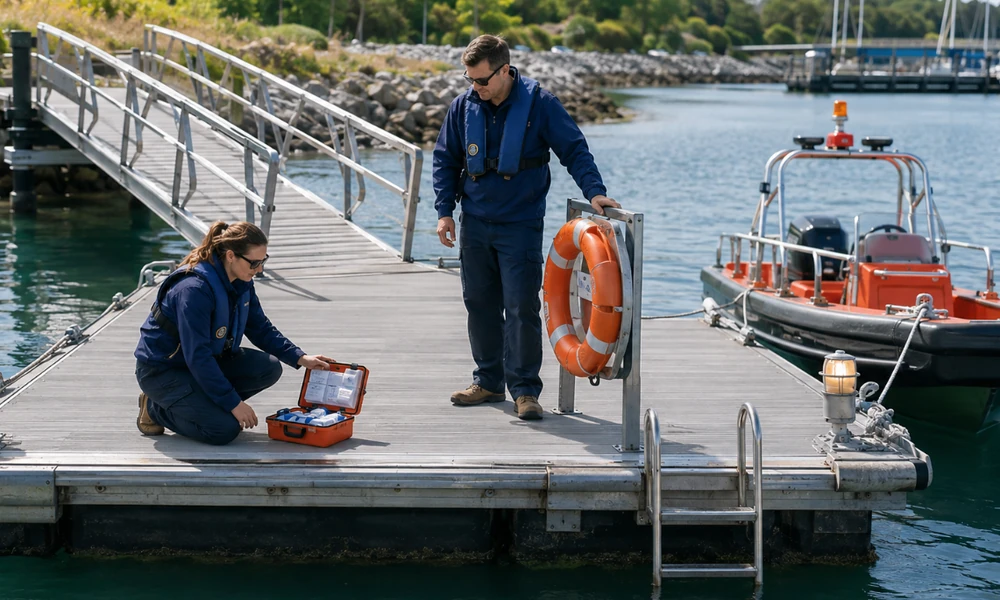
A floating dock emergency might involve a person falling into the water, a medical event, a fire, severe weather, or a damaged boat. In each situation, fast and safe access matters.
Emergency planning should begin before the dock opens for regular use. Owners need to consider how people will leave the dock, how responders will enter, and how rescue equipment will be reached. A clear plan reduces confusion when every minute counts.
Keep the Main Access Route Clear
The route between the shore and the dock should remain open at all times. Storage boxes, hoses, fishing equipment, carts, and loose lines should not block the walkway.
The gangway must also remain stable as water levels change. Check its handrails, hinges, rollers, and walking surface. A steep or slippery gangway might slow responders carrying medical equipment.
Owners should measure the narrowest parts of the route. Emergency personnel might need more room than everyday dock users, especially when moving a stretcher or rescue equipment.
Provide More Than One Exit When Possible
A single exit creates a serious problem if fire, damage, or debris blocks the main route. Larger floating dock systems should include another way to reach shore or move people to a safe area.
The secondary route might be another gangway, a connected dock section, or an emergency boat access point. Its location should be easy to identify from different parts of the dock.
Exit routes must account for changing tides and water levels. A route that works during normal conditions might become difficult to use when the water rises or falls.
Plan for Water Rescue
Anyone who falls from a floating dock needs a safe way to return to the surface. Install marine ladders at practical points rather than placing only one ladder at the far end.
Ladders should extend deep enough into the water for a person to reach the first step. Keep the area around each ladder clear of boats, lines, and equipment.
Life rings, throw bags, and reaching poles should remain visible and easy to access. Check ropes for sun damage, knots, and tangles. Rescue equipment should not be locked inside a cabinet when immediate access is necessary.
Make the Dock Easy to Identify
Emergency responders need clear location information. A large property or marina might have several docks that look similar from shore.
Assign simple names or numbers to each dock, access gate, and main section. Provide the correct street address and describe the closest emergency entrance. Owners should also record the dock’s waterfront location for situations where responders approach by boat.
Share this information with employees, residents, or regular dock users. During an emergency, a caller should be able to explain exactly where help is needed.
Prepare for Fire and Electrical Hazards
Floating docks often contain shore-power connections, lighting, fuel-related equipment, and boats with electrical systems. These features need regular inspection.
Emergency plans should identify the location of electrical shutoffs and other utility controls. Access to these controls must remain clear.
Fire extinguishers should match the risks found at the dock and stay protected from weather. Follow local rules for placement, inspection, and maintenance. Users should never enter the water near a suspected electrical problem.
Maintain Lighting and Visibility
An emergency does not always happen during daylight. Gangways, steps, ladders, dock edges, and exit routes need dependable lighting.
Inspect fixtures for corrosion, water entry, and damaged wiring. Backup lighting offers added protection during a power outage. Reflective markers also help people locate ladders and life rings in poor visibility.
Bright lighting should improve safety without creating glare that makes it harder to see the walking surface or nearby water.
Write and Practice the Emergency Plan
A useful emergency plan should explain who calls for help, who guides responders, where rescue equipment is stored, and how power is shut off. It should also cover severe weather evacuation and procedures for closing the dock after damage.
Post emergency contact information in a protected, visible location. Review the plan with everyone responsible for the property.
Practice basic emergency steps from time to time. A short drill might reveal a blocked route, missing equipment, faulty light, or unclear responsibility.
Floating dock emergency access planning is more than placing a life ring near the water. It connects clear pathways, safe exits, rescue equipment, lighting, location details, and regular training. A well-prepared dock gives users and responders a safer way to act when an unexpected situation occurs.
This post was written by a professional at Supreme Marine Floating Docks. Supreme Marine Floating Docks is dedicated to providing top-quality floating dock Palm Beach and marine accessories that combine durability, innovation, and superior performance. While we are a new brand, our team brings over 50 years of combined industry experience, making us a trusted name in the marine world. We are passionate about designing and delivering products that meet the highest standards, ensuring reliability and longevity in all marine environments. Whether for residential, commercial, or recreational use, our docks are crafted with precision and care, setting a new benchmark in the industry. At Supreme Marine, we don’t just build docks-we create lasting solutions.
